
U.S. Military Posture Points to Possible Venezuela Intervention
U.S. Military Posture Points to Possible Venezuela Intervention
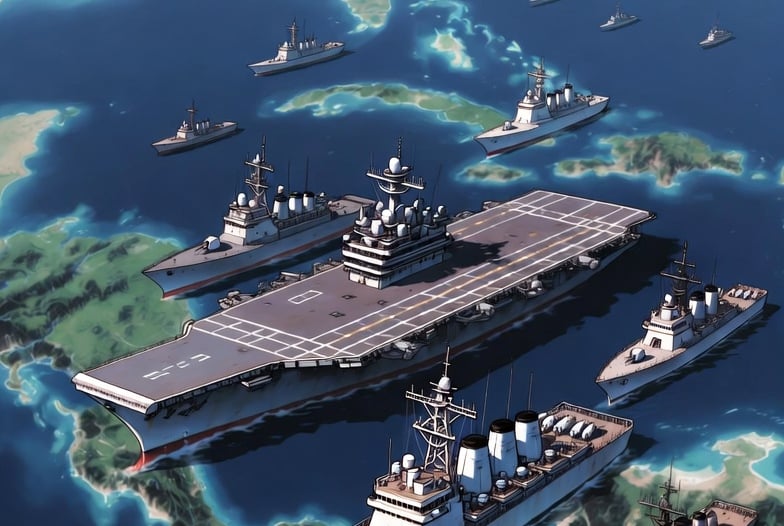
A U.S. carrier strike group has maintained position in the eastern Caribbean since late October. A Federal Aviation Administration temporary flight restriction covering a wide corridor from the Lesser Antilles to the Venezuelan coast took effect November 1 and remains in force until March 31, 2026. Senior defense officials describe the deployment as “prudent positioning.” Venezuelan state media call it the final stage of an invasion plan. The truth, as is often the case, lies closer to the middle than either side admits.
Venezuela’s internal situation has passed the point of no return. Hyperinflation has rendered the bolívar worthless, GDP has fallen roughly 80 percent in twelve years, and more than eight million citizens, one quarter of the pre-crisis population, have left the country. Nicolás Maduro’s government survives through repression, Cuban intelligence support, and irregular forces loyal to no institution except the regime itself. Military morale is low; multiple sources report that significant elements of the officer corps would refuse orders to resist a serious external intervention.
Strategically, the stakes are higher than at any point since the Cold War. Newly verified geological surveys place Venezuela among the world’s largest untapped reserves of rare-earth elements, minerals currently dominated by China and deemed critical to U.S. defense and clean-energy supply chains. The same territory includes portions of the Amazon basin and the planet’s largest proven oil reserves, most still undeveloped because of sanctions and mismanagement.
Current U.S. planning documents, according to officials familiar with them, refer to the Gulf of Mexico as the “Gulf of America” in certain contingency contexts, an unambiguous restatement of the Monroe Doctrine not seen in formal channels for decades. The timing of this week’s release of additional Epstein-related court filings has had the practical effect of crowding every other story off the front pages and cable-news chyrons.


Written By: AD Politics
AD News Editorial Team collaborates on stories in-house and with external reporters to bring you exclusive pieces, like this one.
DON'T MISS OUT, SUBSCRIBE & KEEP UP WITH ALL THINGS AD PLATFORM WHEREVER YOU GET YOUR CONTENT!
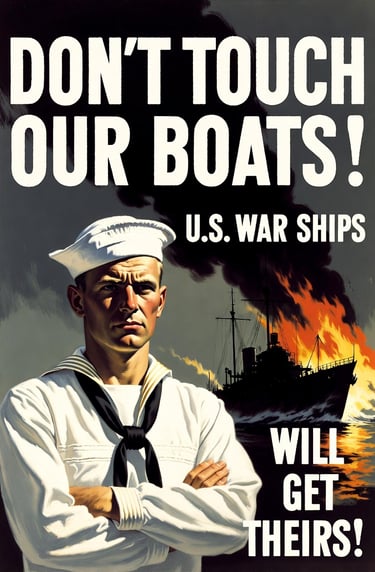
No public announcement of an operation has been made, and deliberate ambiguity remains a core element of the strategy. Yet the pieces now in place, an extended naval presence, restricted airspace, a deeply unpopular target regime, and a rare convergence of humanitarian, environmental, and national-security rationales, represent the clearest preconditions for regime-change action the United States has assembled in Latin America in a generation.
If an intervention occurs, knowledgeable sources expect it to be short, relying heavily on Venezuelan opposition forces and defectors rather than a prolonged U.S. ground commitment. The political outcome in Washington is equally unusual: one constituency would celebrate the collapse of a socialist dictatorship and a major strategic gain in critical minerals; another would point to the rescue of a population from starvation and the launch of the largest reforestation initiative in history. Both arguments would have merit.
For now, the carrier remains on station, the airspace remains closed, and the policy community in Washington is quieter than usual. Experience suggests that is rarely a coincidence.
The situation continues to develop.
Avedis Daily LLC © 2025
This material may not be published, broadcast, rewritten, or redistributed. ©2025 Avedis Daily, LLC. All rights reserved. Quotes displayed in real-time or delayed by at least 15 minutes.
Terms & Conditions | Privacy Policy | About | Contact | Submit A Story | Our Team